

Heritage in Transformation: Adaptive Reuse & Contemporary Architecture

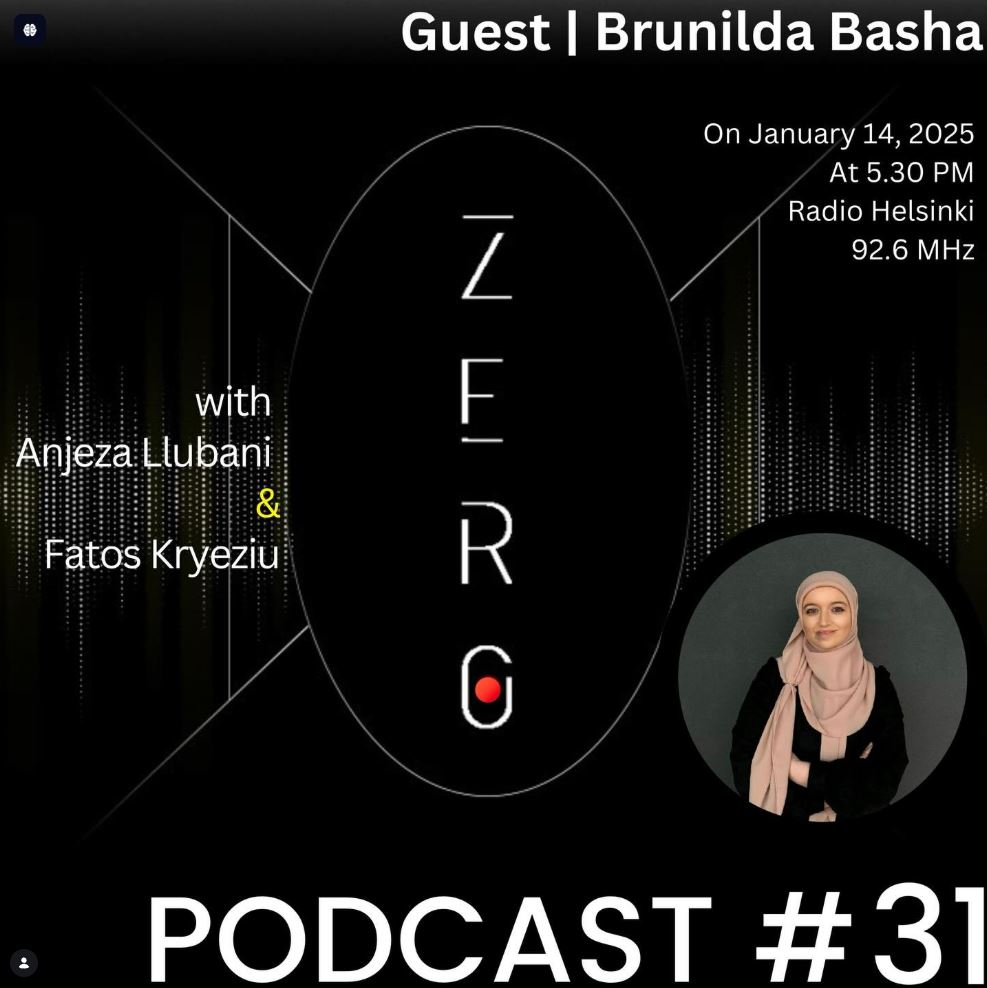
A conversation with architect Brunilda Basha
“Heritage in Transformation: Adaptive Reuse & Contemporary Architecture”
where poetry becomes another lens for reading the city and understanding human experience, revealing the poetics inherent in architectural space.
Brunilda Basha shares her insights on adaptive reuse and the careful preservation of historic buildings, exploring how heritage can dialogue with contemporary life. Beyond architecture, her creative practice extends to literature, reflected in her recent book of poems, “Pikturë e Shkronjezuar.”
🗓 January 14 | 17:30
📍 Zero | Radio Helsinki, 92.6 MHz
Hosts: Anjeza Llubani & Fatos Kryeziu
https://www.instagram.com/zero_5.30_pm/
……………………………………………….
What does “heritage in transformation” mean to you?
I would rather call it revival. Perhaps because the word transformation is often associated, for me, with alteration or alienation. There are cases where transformation can erase everything that once existed, leaving no recognizable traces behind. That is why I prefer terms such as revitalization, rebirth, or bringing back to life something that is dead or in a state of coma. When a building is abandoned, it is left to slowly die alone.
In this context, I see revitalization or adaptive reuse as an ongoing process in which historic buildings may change their function, but not their meaning. They are not frozen objects in time, but living structures that carry memory, identity, and human experience. Transformation becomes a tool to keep heritage active in contemporary life, not to museumify it, but to actualize it—so that it remains useful and in service of society.
Adaptive reuse: a technical act or a cultural and ethical process?
Adaptive reuse is undoubtedly more than a technical act. It is a cultural and ethical process, because it involves decisions about memory, use, social inclusion, and respect for history. Technical skills are essential—they are learned, reliable, and require proper preparation to apply an architectural approach—but the fundamental question is always: for whom are we transforming this building, and what are we choosing to reveal or to conceal?
Which is the most delicate moment: what to preserve or what to change?
Both are equally important and inseparable. The most delicate moment lies in finding the balance between them. Preservation without innovation or without responding to contemporary reality renders a building lifeless, while change without criteria erases identity, original values, and disconnects the layers of history. The decision is never absolute; it requires a deep reading of the structure, its history, and its future use. The true delicacy lies in knowing when to stop.
How can historic buildings become functional without losing their identity?
By understanding function as a new layer, not as a replacement. Identity does not reside only in form, but in the relationship between social, cultural, historical, and aesthetic elements— even in how form relates to light, material, and spatial rhythm. When interventions are legible, honest, and respectful, modern functionality does not erase history; it enriches it.
What do we lack most in Albania: vision, policy, or cultural sensitivity?
I believe we lack cultural sensitivity translated into a long-term vision. Policies often respond to emergencies rather than to potential. Without a shared culture that views heritage as a resource for development rather than an obstacle, policies remain fragmented. What we truly need is love for our country. And it is precisely this love that will help us preserve heritage and understand its true value.
Are cities losing spaces of silence and reflection?
Yes, and this is deeply concerning. In fact, just a few months ago we were discussing this with colleagues at the university. We are witnessing a growing number of master’s thesis proposals focused on wellness, reflection, mental health, and spaces of contemplation. Fifteen to twenty years ago, proposals revolved around affordable housing, cultural centers, airports, or sports complexes—a wide variety of themes. Today, more than 50% of proposals address precisely this void and the pronounced lack of meaningful urban life.
Our cities are becoming increasingly noisy—not only acoustically, but visually and emotionally. Spaces of silence are essential for well-being and collective memory. Without them, the city loses its human dimension.
Architecture and poetry—how do they relate for you?
For me, poetry is another way of reading space. Architecture teaches me structure; poetry teaches me sensitivity. Both deal with void, rhythm, light, and silence. In my experience, they are not separate disciplines, but different languages for the same effort: understanding the human being in space.
“Lettered Painting” — was it born from a concrete space?
Yes and no. It emerged from a series of personal sensations and experiences that needed to be spoken or written—feelings too strong to be kept inside. These emotions were breathed within a specific space. From this perspective, yes, absolutely. The book was born from lived spaces within a real city, and the surrounding environment—natural and architectural, with all its details—intensified both beautiful and painful emotions. The book has been, and continues to be, as well as the poems written after it, a reflection on situations, relationships, and places that have left both physical and spiritual traces.
When you write poetry, do you still think like an architect?
I think of everything—and of nothing. Human beings are holistic entities, shaped by fragments that are sometimes random and sometimes carefully constructed within the cosmology of life—whether personal, familial, professional, or related to talents and inclinations. We cannot divide ourselves. One moment we are simply women, another moment architects, another poets. We are who we are in every space and every time.
In poetry and in architecture, I am the same: fast, and attentive to the right moment to express creativity—literary or visual. I have always functioned this way. I write very quickly; a poem might take no more than five minutes. Similarly, with projects, I may think for days, but once I sit down, I grasp the concept in a short time. My poetic and creative moment is brief, but intense.
If the city were a poem, which verse are we writing today?
Are we speaking about Tirana? I would say we are somewhere in the middle of the poem. Syntactically, we are writing a fast, unedited verse, where words rush past without proper harmony—both grammatically and semantically. The imagery is overloaded, but without a conscious and meaningful use.
The essential question then becomes: will we pause to rewrite this verse, to give it the meaning it deserves so that the rest of the poem can take better shape, or will we let it remain a rushed poem? I do not know how we stand with time, but some lines I once wrote come to mind—born from an intense moment of reality—and the poem closes like this:
The city sways like a shoreless wave…
from the ashes rises a question:
who are we in this moving space?
A question that wanders like a shadow
among the skyscrapers.

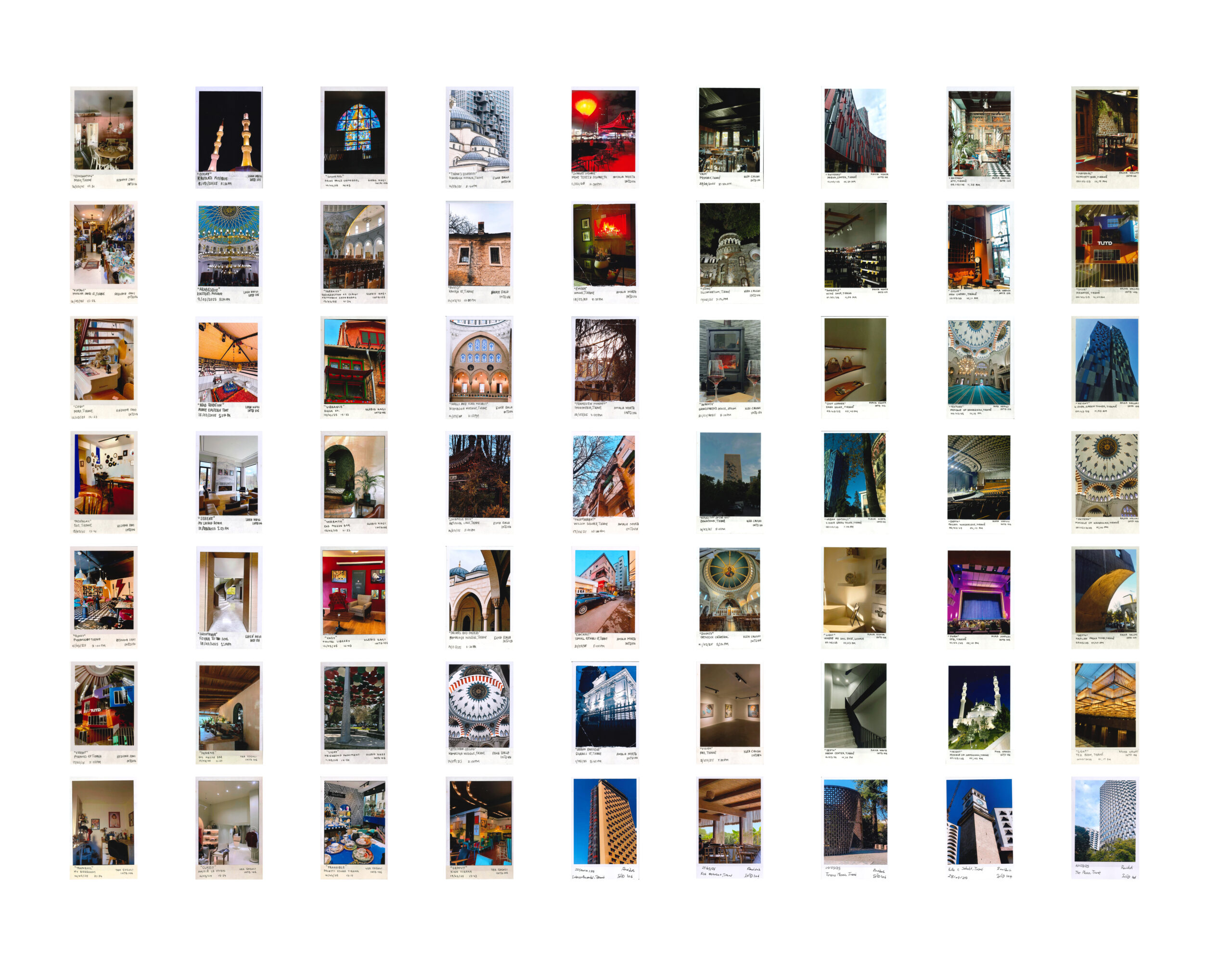
It is essential for human beings to engage in a meaningful dialogue with beauty, aesthetics, and the essence of life. From this perspective, architecture, alongside its theoretical and historical dimensions, should not be perceived as a distant relic or a static display locked within the confines of a museum, but must be understood as a …
This study explores the potential of adaptive reuse as a premier strategy for the reutilization of forgotten historic buildings, with a particular case study of the Bazaar Hammam – a 15th-century Ottoman bathhouse landmark in Elbasan city, Albania. The Hammam now stands in a situation of partial abandonment and partial use, reflective of the wider …